Shame, Silence, and the Slow Work of Healing: Albanian-Americans Are Finally Talking About Mental Health
The Word Nobody Said Out Loud
Grow up Albanian in America and you learn early that some things just don't get talked about. Money problems, yes — occasionally. Relationship drama, maybe — at the dinner table, in coded language. But feelings? Anxiety? Depression? Those words barely exist in the household vocabulary of most Albanian-American families.
"We didn't have a word for therapy in our house," says Erinda Hoxha, a 29-year-old social worker from the Bronx whose parents immigrated from Shkodër in the early 1990s. "If you were sad, you worked harder. If you were anxious, you prayed. If you were falling apart, you held it together until you weren't in public anymore."
That experience isn't unique. Across Albanian-American communities in New York, New Jersey, Michigan, and beyond, mental health treatment has historically carried a stigma so heavy that most people never sought help at all. The reasons are layered — cultural, generational, linguistic, and deeply tied to a specific kind of pride that Albanian identity has long been built around.
Where the Silence Comes From
To understand why mental health has been so taboo, you have to understand what Albanian families survived to get here. Many first-generation immigrants fled economic collapse, ethnic violence, or the psychological wreckage of decades under one of the most isolated communist regimes in the world. Trauma was the baseline. Resilience wasn't a buzzword — it was a survival requirement.
"There's this concept of burrëri — a kind of masculine strength and endurance — that runs very deep," explains Dr. Alban Çela, a licensed psychologist practicing in Astoria, Queens, who works primarily with Albanian-speaking clients. "It's not just men who carry it. Women in Albanian families often feel enormous pressure to hold the household together emotionally, to be the strong one. Admitting you're struggling feels like a betrayal of that role."
That stoicism gets passed down. Second-generation Albanian-Americans describe growing up in households where emotional expression was quietly discouraged — not through cruelty, but through modeling. You watched your parents work 14-hour days without complaint. You watched your grandmother lose a son and still cook Sunday dinner. The implicit message was clear: you push through.
The result, mental health professionals say, is a community carrying an enormous and largely unacknowledged burden. Rates of untreated anxiety and depression, substance use as a coping mechanism, and domestic conflict rooted in unprocessed stress are all concerns that community advocates are increasingly raising — carefully, and often off the record.
The Shame Layer
Beyond stoicism, there's something more specific at work: the fear of what the community will say.
Albanian-American social networks are tight. Church communities, cultural organizations, and extended family circles mean that information travels fast. Seeking therapy — especially in-community — feels risky in a way that it might not for someone without that social web.
"My mom was terrified that if anyone found out I was seeing a therapist, people would think something was really wrong with our family," says Besian Muça, a 34-year-old marketing professional from Yonkers. "Like, it would reflect on her. On my dad. On all of us. Mental illness was something that happened to other families."
This shame operates differently across generations. For first-generation immigrants, mental health treatment is often simply not on the map — it's a concept that feels foreign, expensive, and unnecessary. For their American-born children, the awareness is there, but the guilt of doing something their parents would never do creates its own friction.
The People Breaking It Open
The good news — and there is good news — is that a growing number of Albanian-American mental health professionals are working directly inside this tension, building trust one conversation at a time.
Dr. Çela started hosting informal community conversations at a cultural center in Queens two years ago, deliberately avoiding clinical language and framing discussions around stress, family, and immigration rather than diagnosis. "You can't just show up and say 'let's talk about your mental health.' You have to meet people where they are," he says.
In Michigan, where one of the largest Albanian-American populations in the country lives, a grassroots initiative called Shpirti i Shëndoshë — roughly translated as "Healthy Spirit" — has been connecting Albanian-speaking families with bilingual therapists and hosting community education events at mosques and community centers. The response, organizers say, has been cautious but real.
Social media is playing a role too. Albanian-American creators on Instagram and TikTok are increasingly posting about their own therapy journeys, anxiety struggles, and family dynamics in ways that would have been unthinkable a decade ago. The comments sections of those posts often tell the real story — thousands of people saying, quietly, me too.
What Families Are Actually Navigating
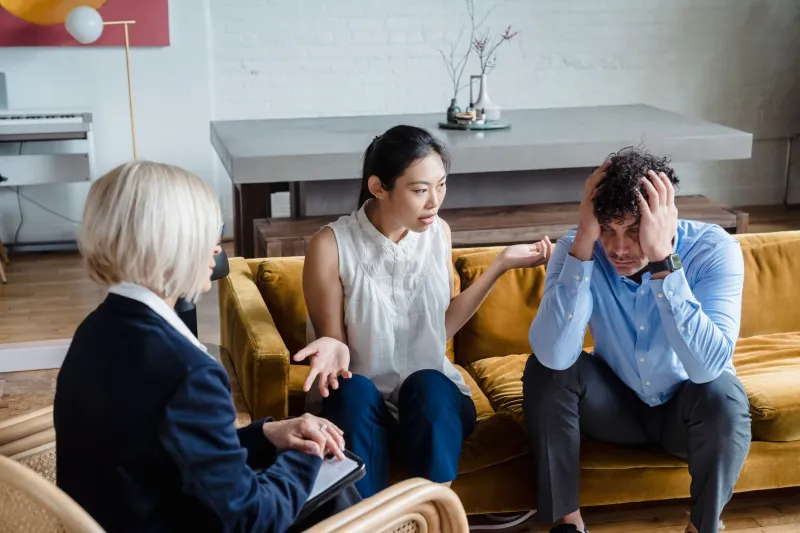
For many Albanian-American households right now, the mental health conversation is happening in pieces — a child mentioning therapy to a skeptical parent, a husband finally agreeing to couples counseling after years of his wife asking, a young woman starting sessions without telling anyone at home.
The intergenerational dynamic is particularly complex. Many second-generation Albanian-Americans are processing not just their own experiences but the inherited trauma of their parents — the immigration journey, the hardship, the silence itself. Therapists who work with this community describe it as a kind of double work: healing yourself while also trying to understand, and sometimes forgive, the generation that taught you not to.
"My parents did the best they could with what they had," Erinda says. "They didn't have the language for any of this. I'm trying to build that language now — for me, and honestly, for them too."
A Community Starting to Listen
Nobody is pretending this is solved. The stigma is real, the access barriers are real, and the cultural gap between mainstream American mental health frameworks and Albanian community values is real. But something is shifting.
More Albanian-American therapists are entering the field specifically to serve their own communities. More community organizations are treating mental wellness as part of their mission rather than a side issue. And more everyday people are starting to say, out loud, that they're not okay — and that not being okay doesn't make them weak.
That might not sound like a revolution. But in a community where silence has been the default for generations, it kind of is.