The Keys They Don't Want: Albanian-American Kids Are Walking Away From the Family Business
The Restaurant That Raised Them
Klevis Duka spent his entire childhood inside a restaurant. Not metaphorically — literally inside it. He did homework at the back booth. He ate dinner off the prep counter. He learned to count change before he learned to ride a bike. His parents, who came from Durrës in 1997, built the place from nothing and kept it running through recessions, pandemics, and the slow grind of the restaurant industry.
At 28, Klevis works in data analytics for a tech firm in Austin, Texas. He has not taken over the restaurant. He doesn't plan to.
"My parents gave everything to that place," he says. "I respect it more than I can explain. But I watched what it did to them. The hours. The stress. The way it consumed every holiday, every weekend. I love them for it. I just can't do it."
This story — the sacrificing immigrant parent, the American-born child who chooses a different path — is playing out in Albanian-American households across the country right now, in ways that are reshaping family dynamics, business succession plans, and the community's economic future.
What Was Built, and What Was Expected
Albanian immigrants who came to the United States in the 1990s and 2000s built businesses under conditions that most Americans would find unimaginable. They arrived with little English, limited capital, and no safety net. What they had was an extraordinary work ethic, tight community networks, and a willingness to do the jobs that others passed on.
Diners, construction companies, landscaping operations, cleaning services, nail salons, grocery stores — the Albanian-American entrepreneurial footprint across the Northeast and Midwest is enormous and largely self-made. And embedded in the sacrifice that built these businesses was an assumption, often unspoken but deeply felt: the kids would take over.
That assumption made sense in the context of how many immigrant families have historically operated. The business was the family's security, its identity, and its legacy. Passing it to the next generation wasn't just practical — it was meaningful.
"My father never said 'you have to run this someday,'" says Anisa Berisha, 26, whose family owns a chain of car washes in suburban New Jersey. "He didn't have to say it. It was just understood. The business was going to be ours."
Anisa is currently in her second year of law school.
The Collision of Two Definitions of Success
For the first generation, success looked like ownership. You built something tangible, something that employed people and generated income and could be passed down. The business was the proof that coming to America was worth it.
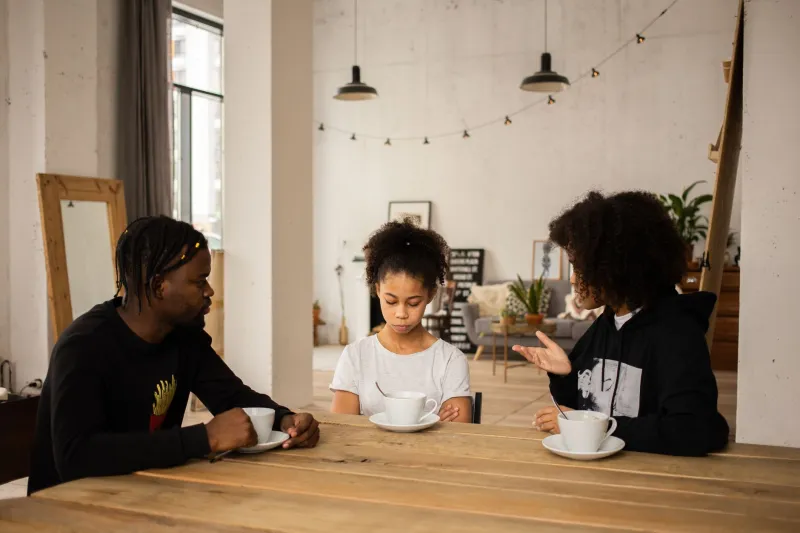
For their children, success often looks different — and that difference is at the heart of the tension. Many second-generation Albanian-Americans grew up watching their parents work themselves to exhaustion, and they internalized a different lesson than the one intended. Instead of this is what I want to inherit, they learned I want something that doesn't cost this much of yourself.
Add to that the fact that these children were educated in American schools, absorbed American professional culture, and often have college degrees that open doors their parents never had access to — and the pull toward corporate careers, creative industries, or entrepreneurship on their own terms becomes very understandable.
"I'm not rejecting what my parents built," says Blerim Shala, 30, a product manager in Seattle whose family runs a construction business in Connecticut. "I'm trying to build something of my own. That should be the same thing to them. But it doesn't always feel that way."
The Guilt That Doesn't Go Away
What makes these conversations particularly hard is the guilt. Almost every second-generation Albanian-American who has walked away from a family business describes carrying a weight that doesn't fully lift, even when they're objectively thriving in their chosen field.
The guilt is compounded by cultural specificity. Albanian family structures tend to be tight and emotionally complex, with a strong sense of collective obligation. Choosing your own path isn't just a personal decision — it can feel like a rejection of the family itself, of the sacrifice, of everything your parents came here for.
"There are days when I'm at my desk in Austin and I think about my dad opening the restaurant at 6am alone," Klevis says. "And I feel terrible. Even though I know — rationally — that I'm not doing anything wrong."
Parents carry their own complicated feelings. Many describe a genuine conflict between wanting their children to succeed and wanting the business to survive. Some feel that their children don't understand what they built. Others are quietly proud but don't know how to say so without undermining the expectation they've spent years projecting.
The Families Finding a Middle Way
Not every story ends in estrangement or resignation. Some Albanian-American families are finding creative compromises that honor both the legacy and the individual.
In one New Jersey family, the daughter who became an accountant now handles the books for the family's three businesses without working in them day-to-day. In another, a son who went into marketing built a social media presence for the family restaurant that doubled its revenue — his contribution to the legacy, on his own terms.
Anisa, the law student, is considering specializing in business law partly because she knows her family's businesses will eventually need sophisticated legal help. "I'm not taking over the car washes," she says. "But I'm not walking away from my family either. I'm just trying to figure out what my version of contributing looks like."
What Comes Next
The Albanian-American business succession question is, at its core, a question about what the community values and how those values evolve across generations. The businesses the first generation built were acts of extraordinary will. What the second generation builds — whether they take the keys or not — will be its own kind of story.
The tension is real. But so is the love underneath it. And in Albanian-American households, those two things have always lived very close together.