Neither Mosque Nor Church: How Albanian-Americans Are Forging Their Own Spiritual Path
An Unusual Inheritance
When people ask Drita Hoxha what religion she is, she usually pauses before answering. Not because she's uncertain, but because the true answer takes longer than most conversations allow.
Her father's family is nominally Muslim — Bektashi, actually, which is already a branch of Islam so heterodox that many Muslims don't recognize it. Her mother's side is Catholic, from a village in northern Albania where the church was the center of community life for centuries. Drita herself grew up in New Jersey attending neither a mosque nor a church with any regularity, but absorbing bits of both traditions through food, music, holiday rituals, and the kind of ambient cultural osmosis that happens in immigrant households.
"I'm Albanian," she says, finally. "That's my answer. The religion part is complicated."
It's a response that resonates across the Albanian-American community in ways that might surprise people unfamiliar with Albanian history. Albania was, after all, the country that declared itself the world's first atheist state in 1967, banning religious practice entirely for over two decades. Before that, it had been home to a genuinely unusual religious coexistence — Muslim, Orthodox, Catholic, and Bektashi communities living in proximity, with identity organized more around clan and language than faith.
That history has produced a diaspora with a complicated, sometimes ambivalent, always interesting relationship to organized religion.
The Interfaith Household
Across the Albanian-American community, interfaith families are common enough to barely register as unusual. Muslim-Christian marriages, households where both Eid and Christmas get celebrated, grandparents who pray in different directions — these aren't rare edge cases. They're a recognizable feature of Albanian-American life.
"My husband is Albanian Orthodox, I'm from a Muslim background, and our kids are being raised with both," says one woman in the Boston area who asked to use only her first name, Fjolla. "We don't see that as a contradiction. We see it as being fully Albanian."
The old Albanian saying — ku është shpata, atje është feja (where the sword is, there is the faith) — is often cited, sometimes approvingly, sometimes critically, to explain the community's historically pragmatic approach to religion. For centuries, Albanians changed or blended faiths under pressure from Ottoman rulers, Austro-Hungarian missionaries, and Serbian Orthodox clergy. The faith was often less a matter of deep conviction than of survival and identity negotiation.
In America, that same flexibility is playing out in a new context — one where there's no external pressure to conform, and where Albanian-Americans are free to figure out what, if anything, they actually believe.
Reclaiming What Came Before
For some, the answer involves going further back than any of the Abrahamic traditions — to the pre-Christian, pre-Islamic folk religion that still surfaces in Albanian customs, stories, and rituals.
The zana — mountain fairies from Albanian mythology. The shtriga — a witch figure found across Albanian folklore. The besë — a code of honor and trust that functions almost like a secular religion in itself. These elements of Albanian spiritual culture predate the arrival of any organized faith and have survived, often underground, for centuries.
A small but vocal group of Albanian-Americans has been actively reclaiming these traditions, studying Albanian mythology, reviving folk rituals, and arguing that the pre-monotheistic spiritual culture of the Balkans is as valid a foundation for Albanian identity as any imported religion.
"The church and the mosque both came from somewhere else," says one researcher and cultural activist based in New York who has been documenting Albanian folk traditions. "The zana is ours. The besë is ours. That feels like a more honest foundation to me."
The Secular Community Question
Then there are the Albanian-Americans who've simply stepped away from organized religion entirely — and are discovering that doing so creates an unexpected problem: where do you find community?
For many immigrant communities, religious institutions do double duty as cultural centers. The church or mosque isn't just a place of worship; it's where you meet other people from home, where your kids find Albanian friends, where cultural traditions get preserved and passed down. Leaving the institution often means losing access to that community infrastructure.
Some secular Albanian-Americans have responded by creating alternative gathering spaces — cultural clubs, language programs, folk dance groups, and community organizations that provide the social functions of religious community without the theological commitments. Others have simply stayed loosely connected to religious institutions for cultural reasons while privately holding no particular faith.
"I go to Albanian Orthodox events because I love the music and the food and the people," admits one young Albanian-American man in Chicago. "I don't believe any of the theology. But I'm not going to give up my community over it."
The Younger Generation's Negotiation
What's most striking, talking to Albanian-Americans in their twenties and thirties, is how little anxiety most of them seem to carry about these questions. The spiritual identity issues that might have felt fraught or shameful to an earlier generation — leaving the faith, marrying across religious lines, rejecting organized religion entirely — are approached with a kind of pragmatic openness.
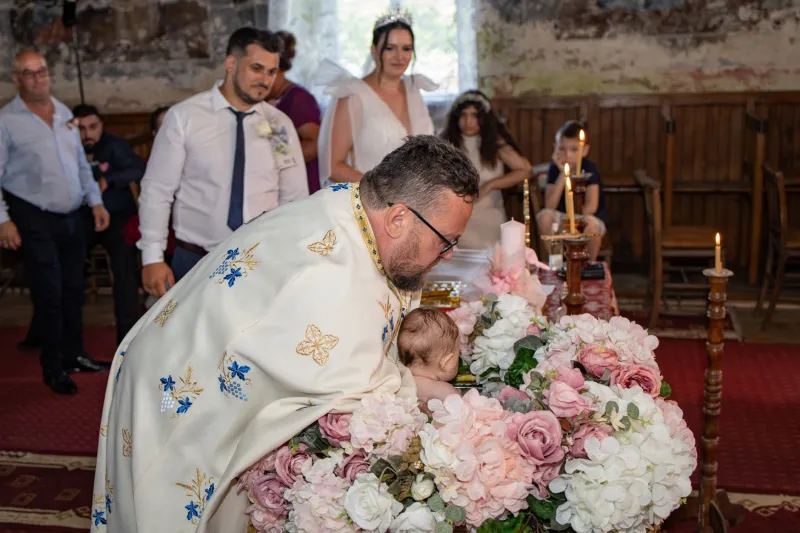
That doesn't mean the conversations are always easy. Some families still carry real tension around religious expectations, particularly around events like weddings, funerals, and the baptism or circumcision of children. The older generation's investment in particular religious identities doesn't always align with their children's more fluid approach.
But increasingly, younger Albanian-Americans are finding ways to honor cultural tradition without submitting to theological authority — keeping the rituals, the food, the music, the gatherings, while quietly setting aside the parts that don't fit their lives.
Drita Hoxha, back in New Jersey, lights candles at both Christmas and Bajram. She teaches her kids the old Albanian folk songs her grandmother sang. She doesn't go to mosque or church. She considers herself deeply connected to her Albanian heritage.
"I think my ancestors would understand," she says, smiling. "Albanians have always found a way to be Albanian first."