Healing in Two Languages: The Albanian-American Therapists Treating Wounds Their Parents Buried
There's a particular kind of silence that grows up in Albanian households. It's not hostile, exactly. It's more like a wall built so carefully, over so many years, that the people living inside it stopped noticing it was there. For a generation of Albanian-Americans who grew up watching their parents carry unspoken weight—war, displacement, poverty, shame—that silence felt like the normal temperature of family life.
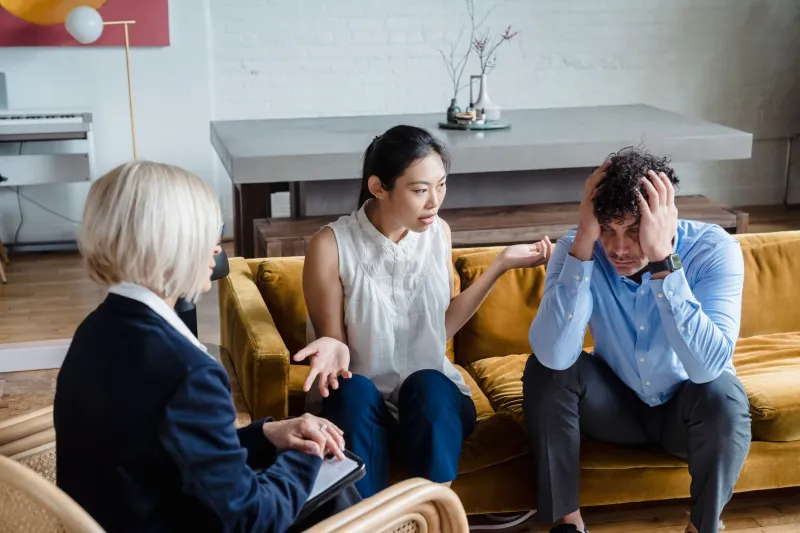
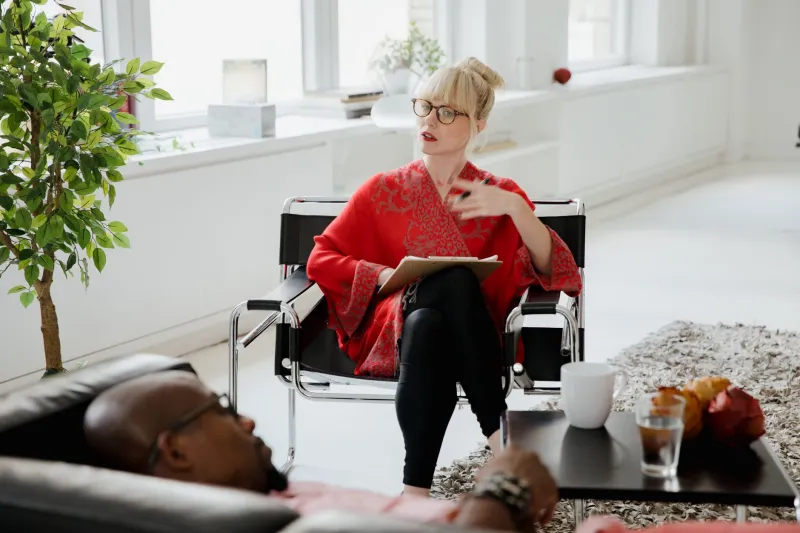
Now some of those same kids, grown up and credentialed, are sitting across from patients in therapy offices and gently asking: What happened to you?
The Unlikely Career Path
Mental health wasn't exactly the family-approved career track in most Albanian-American households. Medicine, law, engineering, business—these were the professions that made parents proud at community dinners. Psychology? That was something Americans did when they had too much time and too little family support.
But the second generation listened anyway. They watched their parents struggle with anxiety that had no name, with grief that never got processed, with marriages that buckled under pressure nobody talked about. And a significant number of them decided to do something about it.
Dr. Elira Hoxha, a licensed psychologist practicing in the Bronx, remembers the exact moment she chose her field. She was sixteen, sitting in the car while her mother cried without explanation after a phone call from Albania. "She never told me what that call was about," Elira says. "She just dried her tears and asked me if I'd eaten. I think I decided right there that I wanted to understand what people couldn't say."
Her path wasn't smooth. Relatives questioned whether she could make a living. Her undergraduate advisor suggested she consider something more "practical." She pushed through anyway, completing her doctorate at Fordham and opening a practice that now serves a significant number of Albanian-speaking clients.
Cultural Fluency as Clinical Tool
What makes Albanian-American therapists distinctive isn't just that they speak the language—it's that they understand the architecture of the culture. They know what besa means not as a dictionary entry but as a lived obligation. They understand how honor functions, how shame operates, how family loyalty can both protect and suffocate.
That knowledge changes the therapeutic relationship in ways that are hard to quantify but impossible to miss.
"When an older Albanian man comes in and I say something in Shqip, I watch his whole body change," says Arben Krasniqi, a counselor working in the Chicago metro area who specializes in trauma and refugee populations. "He stops performing. He stops translating. He can just be whoever he actually is."
Arben notes that many of his older clients have never discussed their experiences—not the war years, not the communist era, not the journey to America—with anyone. "They survived by not talking. That was the strategy. And it worked, in a way. But their kids are anxious, their marriages are strained, and nobody can figure out why."
The therapeutic term for this is intergenerational trauma transmission. The Albanian-American community is living it in real time.
Breaking Through the Field's Own Barriers
Entering mental health as a profession isn't just an internal family negotiation. The field itself has historically lacked diversity, and Albanian-Americans—small in number, not easily categorized by mainstream diversity frameworks—have had to carve out space largely on their own.
Several practitioners interviewed for this piece described feeling invisible in their graduate programs. Their cultural context rarely appeared in case studies. Supervision often required them to explain basic facts about Albanian history and society before getting to the clinical material. "I spent so much time educating my supervisors," says one therapist who asked to remain anonymous, "that I sometimes wondered who was paying for whose education."
There's also the question of stigma within the community itself. Albanian cultural norms around stoicism and self-reliance don't map neatly onto the idea of weekly therapy sessions. Some practitioners have had to reframe the entire concept—positioning therapy not as weakness but as a practical tool, the way you'd see a doctor for a broken bone.
"I tell people: you wouldn't refuse antibiotics because your grandfather didn't have them," says Elira. "Why would you refuse help for your mind?"
Building a Pipeline
What's emerging now is something more organized than a collection of individual practitioners. Albanian-American therapists in cities like New York, Boston, Detroit, and Chicago are starting to find each other—sharing referrals, co-facilitating community workshops, and quietly building what amounts to an informal network.
Some are working with mosques and churches to offer culturally sensitive programming. Others are partnering with Albanian-American community organizations to provide sliding-scale services to recent immigrants. A few are developing content in Albanian specifically to reach older generations who might never walk into a traditional therapy office.
The goal, as Arben puts it, is to make it easier for the next person. "I had to fight for every inch. Maybe the person coming behind me only has to fight for half that."
The Weight of Being Both Healer and Witness
There's a particular challenge in treating your own community that doesn't get discussed enough: the therapist is also a community member. They may know the family. They may share the history. They may be processing their own version of the same trauma they're helping others navigate.
Most practitioners are thoughtful about this. They maintain strict professional boundaries, seek their own supervision, and are careful about dual relationships. But the emotional weight is real.
"Sometimes a client describes something and I recognize it," Elira says quietly. "Not because I've heard it before clinically. Because I've lived it. That's a gift, but it's also something I have to manage very carefully."
The Albanian-American community has spent decades building institutions—businesses, churches, cultural organizations—that reflect its values and serve its needs. Mental health care is, perhaps later than ideal, becoming part of that infrastructure. The therapists leading the way aren't just treating individuals. They're helping a whole community learn, slowly, that it's allowed to speak.