More Than Macchiato: How Albanian Coffee Bars Are Quietly Building Community Across America
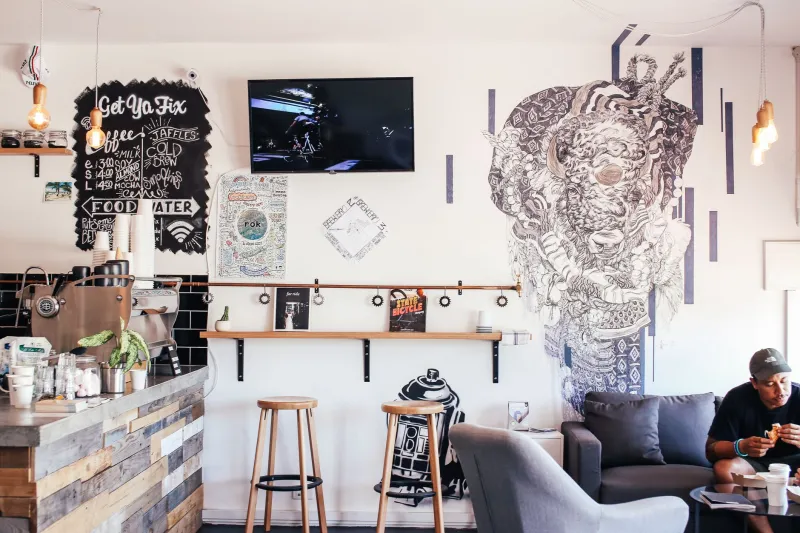
Walk into Kafja Besa on a Tuesday afternoon in Astoria, Queens, and you'll notice something that feels out of step with New York City's usual rhythm. People are just... sitting. Not hunched over laptops with noise-canceling headphones on. Not scrolling. Just sitting across from each other, tiny cups of espresso between them, talking in a loose mix of Shqip and English that drifts toward the tin ceiling like steam.
The owner, Liridon Hoxha, who came from Gjakova in the late 1990s, will tell you this is exactly the point. "Back home, the kafja was never about the coffee," he says, wiping down the marble counter with the practiced ease of someone who has done it ten thousand times. "It was about the two hours you spent after the coffee."
That philosophy — the idea that a coffee bar is really a social institution wearing an espresso machine as a disguise — is quietly spreading across Albanian-American communities from the Northeast to the Midwest. And it's starting to pull in curious neighbors who've never heard of Gjakova but somehow recognize what these spaces are offering: a genuine third place, somewhere between home and work, where the entry fee is just a few dollars and the return on investment is human connection.
What Is Albanian Coffee Culture, Really?
To understand why these spots feel different, you have to understand where the tradition comes from. Albania's coffee culture is layered — Ottoman in its roots, deeply Balkan in its expression, and stubbornly local in its execution. The kahve or kafja in Albanian cities like Gjakova, Shkodra, and Korça historically functioned the way the town square did elsewhere: as a place for news, debate, matchmaking, business deals, and plain old gossip. The drink was almost secondary.
Traditionally, Albanian coffee is served strong and small — a short espresso or, in older households, a Turkish-style brew — accompanied by a glass of cold water and, often, something sweet. But the ritual matters more than the recipe. You don't rush it. You don't take it to go. You sit, you pour, and you let the conversation find its own pace.
For the Albanian diaspora in America, that ritual carries enormous weight. It's a portable piece of home that doesn't require a plane ticket.
The Venues Getting It Right
In the Bronx's Belmont neighborhood, Kafja Illyria has become something of a neighborhood institution since opening in 2019. Owner Mirela Dushku, originally from Tirana, designed the space deliberately to echo the coffee houses she grew up visiting with her father — low wooden tables, strong overhead lighting softened by warm bulb fixtures, and a menu that keeps things simple: espresso, macchiato, Turkish coffee, and a rotating selection of homemade pastries that change based on what Mirela felt like baking that morning.
"I had American friends tell me the menu was too short," she laughs. "I said, good. You're supposed to be thinking about the person in front of you, not the menu."
Out in Chicago's Albany Park neighborhood — a fitting name, as it turns out — a newer spot called Guri (the Albanian word for stone, a nod to the cobblestone streets of old Gjakova) opened in early 2023 and has already become a weekly anchor for the city's scattered Albanian community. Co-owner Besnik Krasniqi says Friday evenings regularly draw a crowd that spans generations: grandparents who arrived in the 1990s, their American-born grandchildren who are maybe rediscovering their heritage, and a growing number of non-Albanian regulars who just like the vibe.
"We have one table that's been reserved by the same four guys every Saturday morning since we opened," Besnik says. "Two are Albanian, one is Greek, one is Puerto Rican. They've been friends for thirty years. They just needed a place to land."
Language, Identity, and the Espresso Machine
What's striking about these spaces is how naturally they function as informal cultural infrastructure — doing things that community centers and language schools struggle to accomplish through formal programming.
At Kafja Besa in Astoria, Liridon has noticed that his coffee bar has become one of the few places where young Albanian-Americans actually practice speaking Shqip in a low-stakes setting. "If you mess up a word, nobody grades you," he says. "You just laugh and try again. That's how language actually survives."
Several owners described a similar pattern: younger Albanian-Americans who grew up speaking mostly English at home will come in, hear the language around them, and gradually start code-switching — mixing Shqip phrases into their orders, catching words in conversations at nearby tables, asking older regulars to explain expressions they've only ever heard from their grandparents.
It's organic in a way that's hard to manufacture. And it's happening over coffee.
Business networking is another quiet function these spaces serve. In communities where trust is built face-to-face and referrals travel through personal relationships, having a reliable gathering point is genuinely valuable. More than one Albanian-American entrepreneur has mentioned landing a contractor, finding a lawyer, or hearing about a job opening because they happened to be at the right kafja on the right afternoon.
Adapting Without Losing the Thread
Not every adjustment is purely cultural, of course. Running a coffee bar in America means navigating food safety regulations, American lease terms, and a customer base that didn't grow up with the tradition. Some owners have made concessions — adding oat milk, offering a small food menu beyond pastries, installing free Wi-Fi — while trying to preserve the essential character of the space.
Mirela in the Bronx drew a firm line at one thing: she doesn't do to-go cups. "I know it costs me sales," she admits. "But the whole point is that you stay. If I start handing out paper cups, I'm just a coffee shop. I'm not a kafja anymore."
That distinction — between a coffee shop and a kafja — keeps coming up in conversations with owners, and it matters. A coffee shop is a transaction. A kafja is an invitation.
The Neighbors Are Noticing
Perhaps the most interesting development is how these Albanian-owned spaces are attracting non-Albanian regulars who may not know anything about Gjakova or Ottoman coffee traditions but respond viscerally to what these places feel like.
In a culture exhausted by the efficiency of Starbucks and the performative busyness of co-working cafés, there's a real hunger for somewhere that doesn't feel like it's trying to maximize your productivity. Albanian coffee culture, with its built-in insistence on slowness and presence, offers something that turns out to be pretty universally appealing.
Besnik in Chicago puts it simply: "People come in stressed. They leave slower. That's the whole thing."
Maybe that's the real Gjakova effect — not just the espresso, not just the community, but the quiet radical act of insisting that time spent with other people is time well spent. In America in 2024, that might be the most subversive thing you can offer someone.
And all it costs is a small cup of very good coffee.