Dollars Across the Ocean: How Albanian-Americans Are Quietly Rebuilding the Villages They Left Behind
It's a Tuesday afternoon in the Bronx, and Blerina Gjoka is standing in line at a money transfer shop on Arthur Avenue, an envelope tucked under her arm. She does this every four weeks, like clockwork. The amount varies — sometimes $300, sometimes closer to $800 — depending on what her mother back in Shkodër needs that month. A medical bill here, a roof repair there. Last spring, it was tuition for her younger brother's university semester.
"People think it's just sending money," she says, half-laughing. "It's not. It's managing two households from two different continents."
Blerina is far from alone. Across the United States — from the Albanian enclaves of the Bronx and Staten Island to the growing communities in Michigan, Illinois, and beyond — thousands of Albanian-Americans are quietly participating in one of the most powerful and least-discussed economic systems in the diaspora world: remittances.
The Numbers Behind the Feeling
Remittances to Albania have been a cornerstone of the country's economy for decades. According to the World Bank, remittances have historically accounted for somewhere between 8 and 12 percent of Albania's GDP in recent years — a staggering figure that puts the country among the most remittance-dependent nations in Europe. The United States is one of the top source countries for these transfers, alongside Italy and Greece.
But statistics only tell part of the story. What the data doesn't capture is the emotional weight of those wire transfers — the guilt, the love, the obligation, and sometimes the resentment that travel alongside the dollars.
For many Albanian-Americans, sending money home isn't a choice so much as an unspoken contract. You left. You found opportunity. Now you share it. That's just how it works.
Building More Than Houses
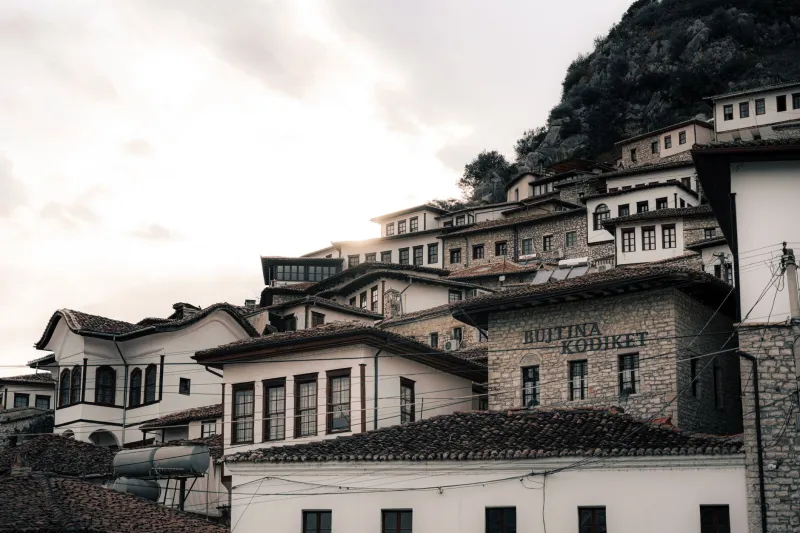
In the village of Dardhë, in the Korçë region, a new community center stands where a crumbling structure once sat. It was funded almost entirely by a handful of families who emigrated to the US in the 1990s and pooled their resources two decades later to give something back. Down the road, a local school got new computers — purchased by a man in New Jersey who hadn't set foot in Albania in fifteen years but still knew the names of every kid in his cousin's neighborhood.
These stories repeat across the country. A family in Michigan funds their village's water infrastructure. A restaurant owner in Brooklyn quietly covers the medical expenses of elderly relatives who can't navigate Albania's patchwork healthcare system. A second-generation Albanian-American in Chicago sets up a small scholarship fund for students in his grandparents' hometown — a place he's visited exactly twice in his life but feels inexplicably tied to.
The impact is real and visible. Villages that might otherwise empty out are staying alive. Young people are finishing school. New homes are going up on land that's been in families for generations.
When Generosity Gets Complicated
But it's not always a feel-good story. Ask anyone who's been doing this for years, and they'll eventually tell you about the friction.
There's the cousin who calls every time a bill arrives, treating the American branch of the family like an ATM with no limit. There's the uncle who resents the money because it comes with invisible strings — expectations, opinions, a sense that the one sending the cash also gets to have a say in how it's spent. There's the sister who stayed behind and quietly wonders whether her sibling's success overseas was built on a foundation that left her holding everything together back home.
"My brother sends money every month and he's very generous, I'm not saying he's not," says one woman from Vlorë, now living in Staten Island, who asked not to be named. "But sometimes I feel like he thinks that because he sends money, he doesn't have to actually be there. For the funerals. For the hard days. Money can't replace presence."
This tension — between financial support and emotional absence — is something Albanian-American families rarely talk about openly. It sits under the surface of holiday phone calls and Facebook messages, a quiet undercurrent of unresolved complexity.
The Second Generation Steps In — Or Steps Back
For the children of Albanian immigrants, the relationship with remittances gets even more layered. Many grew up watching their parents stretch paychecks across two countries, sometimes going without themselves so that relatives overseas could have more. Some carry that same sense of duty into adulthood. Others quietly step back.
"My parents sent money home their entire lives," says Artan Dema, a 34-year-old accountant in Philadelphia whose family came from a small village near Gjirokastër. "I understand why. But I also grew up watching my mom stress about money constantly. Now that I'm earning my own income, I help when I can, but I've had to set limits. And that's its own kind of guilt."
The second generation is also starting to think differently about how they contribute. Rather than direct family transfers, some are exploring more structured forms of giving — small nonprofits, community development projects, educational funds. The goal is the same: invest in the homeland. But the method is shifting from personal obligation to something that feels more sustainable, and maybe a little less emotionally loaded.
A Lifeline With a Complicated Legacy
Economists who study migration patterns will tell you that remittances are one of the most efficient forms of wealth transfer from rich countries to developing ones — more targeted than foreign aid, more immediate than government programs. For Albania, they've been nothing short of a lifeline during periods of economic instability.
But they also create dependency. Communities that rely heavily on outside money can struggle to build local economies that stand on their own. Young people sometimes delay building careers at home because a relative abroad is covering the bills. It's a paradox: the money that keeps villages alive can also slow their evolution.
None of this makes the people sending the money wrong. They're doing what families do. They're loving across distance, in the most practical language available.
What Stays, What Changes
Blerina finishes her transfer and steps back out onto Arthur Avenue. She's been doing this for eleven years. Her mother is getting older. The amounts have gone up.
"I don't think of it as a burden," she says, pulling her jacket tighter against the November air. "I think of it as... being Albanian. You don't leave your people. Even when you leave."
Back in Shkodër, her mother will get a notification on her phone. A small sound, a familiar name. Another month, another thread in the long, stretched cord that connects two worlds.
The dollars keep moving. The villages keep changing. And somewhere in the middle, Albanian-American families keep figuring out what it means to belong to two places at once — fully enough to build a life here, and deeply enough to keep pouring into something there.