Pass the Bread, Skip the Argument: Inside the Messy, Meaningful Identity Talks Happening at Albanian-American Dinner Tables
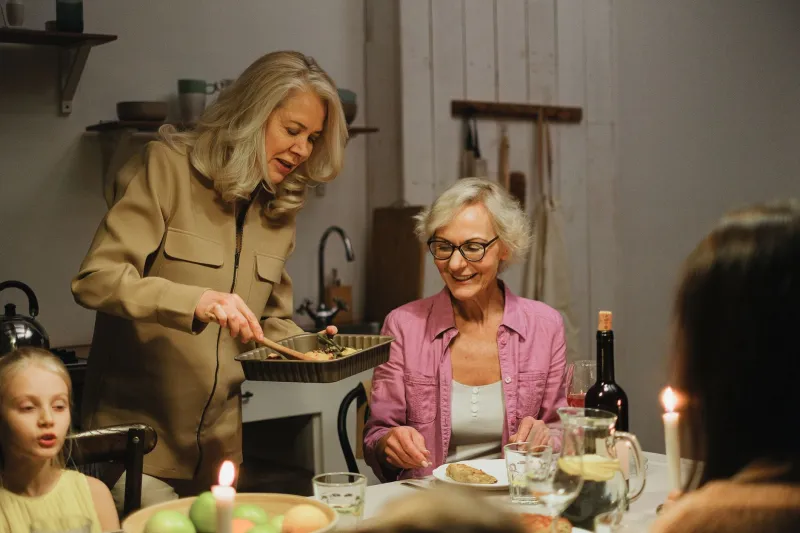
There's a particular kind of silence that falls over an Albanian-American dinner table right before someone says something that can't be unsaid. You know the one. The spoon stops mid-stir. Someone refills their water glass just to have something to do with their hands. And then—boom—a twenty-three-year-old from New Jersey announces she's not going to her cousin's engagement party because she barely knows him, and suddenly the lamb is cold and nobody's eating it.
If you grew up in an Albanian household in the US, you've lived some version of this scene. Maybe it was about dating someone who wasn't Albanian. Maybe it was about skipping Sunday church. Maybe it was about changing your name on your résumé so it didn't look "too ethnic." Whatever the flashpoint, the dinner table has quietly become the arena where two worlds—the one your parents carried over in their luggage and the one you were born into—crash into each other on a Tuesday night.
The Table as Neutral Ground (Sort Of)
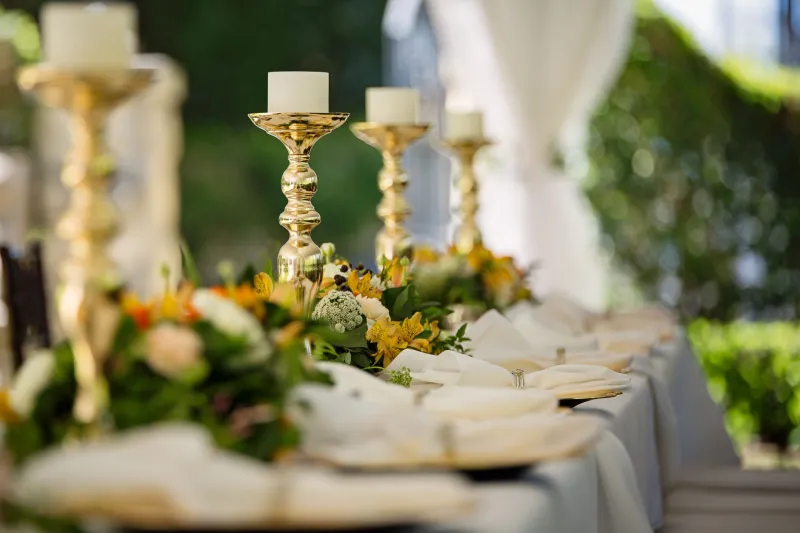
For many Albanian-American families, food is the great equalizer. It's the one place where cultural identity is unambiguous—the byrek is always byrek, the raki is always raki—and that shared ritual creates a kind of safety net for harder conversations. But that doesn't mean those conversations are easy.
"My mom makes the same dishes her mother made in Shkodër," says Arta, 27, who grew up in the Bronx. "So in a weird way, the food makes her feel like nothing has changed. And then I open my mouth and remind her that everything has."
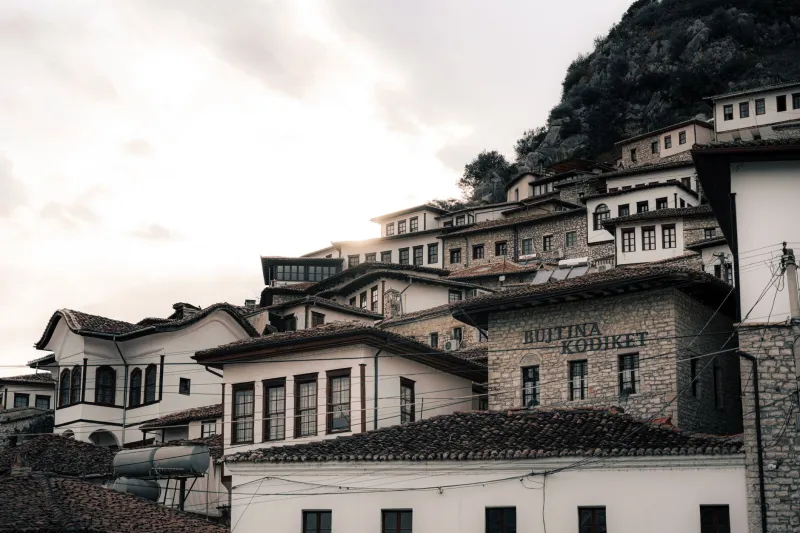
Arta's family immigrated in the late 1990s, part of a wave that reshaped Albanian communities in cities like New York, Boston, and Detroit. She describes dinner as a kind of ritual negotiation—her parents holding tight to a version of Albanian identity rooted in village-era norms, while she and her siblings try to explain what it actually feels like to be Albanian and American at the same time.
"There's no Albanian word for 'boundaries,'" she jokes. "Or if there is, nobody in my family uses it."
Religion, Relationships, and the Really Loaded Questions
For families navigating identity in real time, a few topics come up again and again. Religion is a big one. Albania's religious landscape is famously plural—Muslim, Orthodox, Catholic, and Bektashi communities have coexisted for centuries—but in the diaspora, that complexity sometimes gets flattened. Families who weren't particularly observant back home find themselves leaning harder into religious identity as a way of staying connected to something, which can create friction when their American-raised kids don't share the same attachment.
"My dad became more religious after we moved here, not less," says Besnik, 31, who lives in Chicago. "I think it was about community. But for me, it felt like a rule being added after the game already started."
Dating is the other perennial pressure point. The expectation to marry Albanian—or at the very least, to marry someone who "understands the culture"—is alive and well in many households, even if it's rarely stated outright. It tends to live in comments rather than commands. A raised eyebrow. A pointed question about where someone's family is from. A grandmother who suddenly remembers a very eligible cousin she'd like you to meet.
"Nobody ever told me I had to date Albanian," says Mirela, 25, from Detroit. "But the implication was always there. When I brought home someone who wasn't, it wasn't a fight—it was just this long, heavy quiet. Which was almost worse."
When Parents Start Listening
Here's the part of the story that often gets left out: sometimes these conversations actually work.
Dr. Lindita Hoxha, a clinical psychologist who works with immigrant families in the New York area, says she's seen a real shift in how Albanian-American parents engage with their kids on identity questions—especially parents who've been in the US for more than a decade.
"The families that struggle most are the ones where parents feel like any change in their child is a rejection of who they are," she explains. "But I'm seeing more parents who are genuinely curious. Who ask questions instead of shutting conversations down. That's new, and it's significant."
She points to a generational pattern: first-generation parents who arrived as adults often experience their children's Americanization as a kind of grief. But as they build their own roots in the US—join community organizations, make American friends, watch their kids succeed—many begin to see assimilation less as loss and more as expansion.
"There's a mom I work with who used to cry when her daughter spoke English at home," Dr. Hoxha says. "Now she asks her daughter to help her understand American workplace culture. The dynamic completely flipped."
The Kids Are Translating More Than Language
For many second-generation Albanian-Americans, the role of cultural translator is exhausting and invisible. They're not just switching between English and Shqip—they're switching between value systems, between ways of understanding family obligation, success, and selfhood.
And increasingly, they're doing it out loud, at the dinner table, in real time.
"I think my parents assumed I would just absorb Albanian culture and American culture and somehow they'd sit neatly side by side," says Arta. "But that's not how it works. They conflict. And when they conflict, someone has to talk about it."
What's striking, across the families we spoke with, is how many of them describe these uncomfortable conversations as ultimately strengthening their relationships—even when they don't resolve anything. The act of showing up to the table, literally and figuratively, seems to matter.
"My dad and I disagree on like eighty percent of social stuff," says Besnik. "But we eat dinner together every Sunday. We argue, we laugh, we eat the same food. I think that's actually how culture survives—not by staying the same, but by being fought over by people who love each other."
No Resolution, Just the Next Meal
There's no tidy ending to these stories, because there's no tidy ending to the experience of being between two cultures. Albanian-American identity isn't a fixed thing—it's something that gets renegotiated every generation, in every household, over every shared meal.
The dinner table won't solve the big questions. It won't tell you how Albanian you're supposed to be, or how American, or what you owe your parents, or what you owe yourself. But it keeps the conversation going. And in a community that has always prized resilience above almost everything else, that might be enough.
Pass the bread. Start talking.